---
title: "Real Impact from IOM : Steel Mill Success Stories"
description: Discover how IOM transformed steel mill operations, delivering measurable impacts through customized solutions and successful implementations.
---
[Skip to content](https://www1.groupeshift.ca/en/iom/case-studies#main-content)
- [← Back to the Shift Group's Website](https://groupeshift.ca/en/)
Close
- [Platform](https://www1.groupeshift.ca/en/iom/the-iom-platform)
- [IOM VS ERP](https://www1.groupeshift.ca/en/iom/iom-vs-generic-erps)
- [Customer Success](https://www1.groupeshift.ca/en/iom/case-studies)
- [Approach](https://www1.groupeshift.ca/en/iom/our-approach)
- [Team](https://www1.groupeshift.ca/en/iom/team)
- [Contact](https://www1.groupeshift.ca/en/iom/contact)
en
[es](https://www1.groupeshift.ca/es/iom/exito-de-nuestros-clientes)[fr](https://www1.groupeshift.ca/iom/etudes-de-cas)
[Schedule a consultation](https://cta-service-cms2.hubspot.com/web-interactives/public/v1/track/click?encryptedPayload=AVxigLKB3SECHxkrAyG5g02kO2moDGlP9apfikYeZCX9Arrtbnj72DSiRidDLlDQGTht2jsmQqF%2B2uDtgJ00QSx3xZtMZ4wMU%2Bob%2FYwi%2BOZZAI3XWu9n8kCC%2FDpX6JG8hOj1%2BoVEFOafziEaFd22TioKuQLQ3hVjiCTZ5296SpWSt1RjGPzfFtw8Muqq&portalId=39507550)
[%20(1).png?width=240&height=96&name=Shift.%20IOM%20(500%20x%20200%20px)%20(1).png)%20(1).png?width=240&height=96&name=Shift.%20IOM%20(500%20x%20200%20px)%20(1).png)](https://www1.groupeshift.ca/en/iom/?hsLang=en)
- [Platform](https://www1.groupeshift.ca/en/iom/the-iom-platform)
- [IOM VS ERP](https://www1.groupeshift.ca/en/iom/iom-vs-generic-erps)
- [Customer Success](https://www1.groupeshift.ca/en/iom/case-studies)
- [Approach](https://www1.groupeshift.ca/en/iom/our-approach)
- [Team](https://www1.groupeshift.ca/en/iom/team)
- [Contact](https://www1.groupeshift.ca/en/iom/contact)
en
[es](https://www1.groupeshift.ca/es/iom/exito-de-nuestros-clientes)[fr](https://www1.groupeshift.ca/iom/etudes-de-cas)
[Schedule a consultation](https://cta-service-cms2.hubspot.com/web-interactives/public/v1/track/click?encryptedPayload=AVxigLKB3SECHxkrAyG5g02kO2moDGlP9apfikYeZCX9Arrtbnj72DSiRidDLlDQGTht2jsmQqF%2B2uDtgJ00QSx3xZtMZ4wMU%2Bob%2FYwi%2BOZZAI3XWu9n8kCC%2FDpX6JG8hOj1%2BoVEFOafziEaFd22TioKuQLQ3hVjiCTZ5296SpWSt1RjGPzfFtw8Muqq&portalId=39507550)
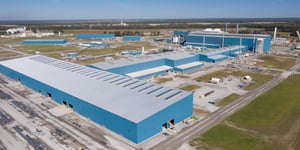
# Real Impact from Real Mills: How Leading Producers Transformed Operations with IOM
Every steel mill faces distinct challenges, whether launching greenfield operations, expanding capacity, ensuring compliance, or modernizing fragmented systems. Explore how IOM delivered measurable business impact across diverse scenarios. Download detailed case studies for technical depth and stakeholder insights.
- [Big River Steel](https://www1.groupeshift.ca/en/iom/case-studies#big)
- [North Star BlueScope Steel](https://www1.groupeshift.ca/en/iom/case-studies#north)
Case Study
## Big River Steel: Greenfield Launch with $3B Investment at Stake
#### Company Profile
**3.5M tons annually | Arkansas, USA | Forbes-ranked "Cleanest & Fastest-Growing Steelmaker in America" | LEED-certified facility**
#### **Business Challenge**
In 2014, Big River Steel broke ground on a greenfield mill built on what was literally a cornfield. The physical infrastructure—coils, equipment, Level 0–3 systems—was being built by world-class equipment manufacturers. But there was a critical gap: no one was providing a Level 4 order management system.
That omission was catastrophic. Without a functioning Level 4:
- No ability to accept customer orders
- No production scheduling capability
- No inventory tracking
- No financial close
- 1,700+ employees would be idle
- $3B+ in equipment would generate zero ROI
- An unmovable launch deadline with global stakeholders watching
#### **Decision-Making Framework**
Big River evaluated SAP and Oracle. Both vendors promised feasibility but struggled to articulate steel-specific solutions. The timeline (2+ years minimum) conflicted with the mill's launch date. The cost ($50M–$100M+) seemed disproportionate for order management alone.
"We had some familiarity with Shift's team from previous interactions. We liked the product they'd delivered. What stood out was that they grew up in steel. They understand the language, the process, the terminology. Generic consultants don't."
-1.png?width=300&name=Cr%C3%A9ation%20sans%20titre%20(36)-1.png)
Mark OrvisDirector of Quality Assurance and Technical Service, Big River Steel
### The 18-Month Build - Collaborative Deep-Dive
**Month 1: Deep Analysis & Scoping**
- Comprehensive audit of BRS's operational requirements
- Definition of process workflows (how orders flow from customer → production → fulfillment)
- Wireframe design and UX validation with BRS teams
- Technical architecture finalized (C#.Net, SQL Server, integration points)
**Months 1–18: Iterative Development**
- Modular build sequence:
- Phase 1: Customer module (contacts, credit terms, ship-to addresses)
- Phase 2: Product/coil specification (dimensions, strength, grade)
- Phase 3: Metallurgical specs and compliance rules
- Weekly iterations with BRS operations teams
- Real-time feedback incorporation
- Shift team embedded in BRS planning
**Key Design Insight**
The modular architecture allowed information from multiple modules to populate single user screens, creating intuitive workflows that matched BRS's actual operational reality—not a generic flow.
### Day One: The Critical Moment
**The Setup**
Launch day. 1,700 employees. Billions in equipment. Multiple software systems going live simultaneously (Level 2, Level 3, Level 4).
To manage the chaos, Shift's team set up a "war room" in the BRS cafeteria. Real purchase orders were processed live. Developers were present to make on-the-fly fixes. Every single IOM transaction worked.
**-1.png?width=83&height=81&name=Cr%C3%A9ation%20sans%20titre%20(36)-1.png)**
**"Ironically, of the four software platforms, IOM was the only one that worked flawlessly from Day One. The others all had issues. IOM has been running since the moment we turned it on."**
Marc Orvis - Director of Quality Assurance and Technical Service, Big River Steel
- Operations & Sales Impact
- Quality & Compliance Impact
- IT & Finance Impact
- Employee & Organizational Impact
- Evolution & Future Roadmap
Operations & Sales ImpactQuality & Compliance ImpactIT & Finance ImpactEmployee & Organizational ImpactEvolution & Future Roadmap
## Operations & Sales Impact
**Order Acknowledgment Time**
- Before: 2 weeks (industry standard) — customers waiting for confirmation
- After: <1 day (often <1 hour) — competitive advantage in lead-time responsiveness
- Improvement: 96% faster
- Business Impact: Faster customer response = higher win rates + more customer satisfaction + competitive positioning
**Production Planning Speed**
- Improvement: Up to 30% faster scheduling
- Benefit: Better utilization of expensive mill equipment | Less downtime | Higher throughput
**Order Accuracy**
- Reduction: Up to 40% fewer order errors
- Benefit: Fewer production rework cycles | Less material waste | Higher margins on every coil

## Quality & Compliance Impact
**Audit Preparation Time**
- Before: 3–4 weeks of data gathering for IATF/VDA audits
- After: <1 week (data centralized in IOM)
- Improvement: 50% reduction in audit burden
**Why?**
Purchase orders, invoices, credit/debit memos, shipping documentation, MTRs, certifications—all in IOM. Auditors have 100% visibility without silo-hopping.
**Certification Maintenance**
- IATF Compliance: North American automotive supply requirement — maintained effortlessly
- VDA Compliance: European automotive requirement — supported
- Regulatory Risk: Near-zero exposure

## IT & Finance Impact
**Cost Avoidance:**
- Avoided: $50M–$100M+ typical ERP implementation
- Actual IOM investment: "Very competitively priced" (Mark Orvis)
- Savings: $30M–$80M in capital avoided
**Operational Control:**
- Source code ownership: BRS's IT team can modify IOM independently
- Zero vendor lock-in: Future flexibility assured
- Strategic advantage: System evolves with business, not constrained by vendor roadmap
## Employee & Organizational Impact
**Training & Adoption**
- Training time: 60% faster than typical ERPs
- Operational readiness: Most new hires productive within 2 weeks
- User feedback: "Learning IOM is probably the easiest part of the job for new employees"
**Experience Improvement**
- Reduced frustration: Single source of truth reduces coordination burden
- Job satisfaction: Employees aren't fighting system limitations
- Retention: Low turnover among power users

## Evolution & Future Roadmap
**Current State (2014–Present)**
- Big River Steel scaled from 1.5M to 3.5M tons annually—IOM scaled seamlessly
- Zero redesign required | Zero downtime | Full audit trail maintained
- Internal BRS IT team now makes optimizations independently
- Relationship with Shift remains active and collaborative
**Future Vision (Mark Orvis)**
- AI-assisted purchase order reading (similar to receipt scanning apps)
- Potential to reduce order entry team from 15 people to 4–5
- Elimination of data entry errors ("typo 1.0 vs. 0.1")

### Key Takeaway from BRS
IOM didn't just work on Day One. It became the operational backbone that enabled a $3B investment to generate ROI immediately. Flexibility, speed, and partnership made the difference.
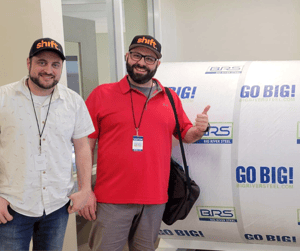
Columbus Mississippi | North Star BlueScope Steel
## Multiple Operators, Multiple Solutions: How Diverse Mills Found Success with IOM
Not every implementation mirrors Big River Steel. Some clients prioritized different outcomes:
**Client Profile Composite**
- Columbus, Mississippi: Mid-size specialty mill | Focus: inventory optimization
- North Star BlueScope Steel (Delta, Ohio): Large Midwest operation | Focus: supply chain speed
- Columbus, Mississippi: Inventory Optimization
- North Star BlueScope Steel: Sales Cycle Acceleration
Columbus, Mississippi: Inventory OptimizationNorth Star BlueScope Steel: Sales Cycle Acceleration
## Columbus, Mississippi: Inventory Optimization
**Challenge**
Carrying inventory is expensive. Predicting demand accurately was difficult across multiple product lines.
**IOM Solution**
Real-time inventory tracking + usage analytics module → demand forecasting insights
**Quantified Benefit**
- Inventory carrying costs reduced by 18-25%
- Stock-out frequency decreased from 6 to 1-2 per month
## North Star BlueScope Steel: Sales Cycle Acceleration
**Challenge**
Competitive market demanded faster quotes and order turnaround. Sales cycle delays lost deals.
**IOM Solution**
Order entry acceleration + automated quote generation → faster response to RFQs
**Quantified Benefit**
- Quote turnaround: 5-7 days → 1-2 days
- Win rate improvement: 8-15% increase in closed deals
### Collective Insights
Across all three operators, IOM delivered:
- Operational flexibility: Each mill customized IOM to its priorities
- Measurable ROI: Cost reductions, speed gains, risk mitigation quantified
- Scalable partnerships: Shift adapted to each client's culture and pace
## Common Success Patterns Across All Clients
1
Steel-Native expertise accelerated every project.
Vendors unfamiliar with mill operations cause delays. IOM's team understood coil tracking, grade families, and IATF requirements from Day One.
2
Partnership model matters.
Clients valued Shift's accessibility, responsiveness, and willingness to co-design solutions.
3
Flexibility drives ROI.
Each mill customized IOM differently. The system adapted to their process, not vice versa.
4
Day-One success sets the tone.
Every IOM client went live successfully and operated productively from launch. This contrasts sharply with industry norms for ERP projects.
## What Our Customers Want You to Know Before You Start
- Lesson 1: Define Your Process Clearly
- Lesson 2: Choose a Partner You Trust
- Lesson 3: Process First, Software Second
Lesson 1: Define Your Process Clearly Lesson 2: Choose a Partner You TrustLesson 3: Process First, Software Second
### Define Your Process Clearly (Before Development Starts)
**Guidance**
Spend time upfront defining exactly how you want to run your business—order workflows, approval sequences, quality checkpoints, financial controls. Don't assume the software will figure it out.
**Big River Steel's Experience**
"We weren't super clear on process at the start. Shift helped us define it. That clarity prevented major rework later."
**Implication**
IOM's Phase 1 (Discovery & Audit) is not a cost—it's an insurance policy against costly mid-project pivots.

## Choose a Partner You Trust
**Guidance**
This isn't a transactional software purchase. This is a multi-year partnership. Choose a vendor you're comfortable with, that communicates clearly, and that responds when you need them.
**Big River Steel's Criterion **
"Can they respond when we have a production emergency? Are they available? Do we have direct access to senior people?"
**Implication**
Evaluate vendors not just on features, but on partnership quality, accessibility, and responsiveness.
## Process First, Software Second (Never Reverse It)
**Guidance**
Your software should enable your operational logic, not force you into its logic. Define how you want to run your business. Then build/configure software that supports that.
**Mark Orvis's Core Philosophy**
"Software can't dictate how you run your business. It should be the other way around. You decide how you want to manage your enterprise. Then you build the software to support that process."
**Implication**
Avoid ERPs that force process adaptation. Choose flexibility.

### Want to understand the system deeper?
[Explore modules →](https://www1.groupeshift.ca/en/iom/the-iom-platform?hsLang=en)
### How does this compare to what SAP/Oracle promised?
[See the contrast →](https://www1.groupeshift.ca/en/iom/iom-vs-generic-erps?hsLang=en)
## Member of leading industry associations







[.png?width=200&name=Shift.%20IOM%20(500%20x%20200%20px).png)](https://www1.groupeshift.ca/?hsLang=en)
- The Platform
- [IOM Platform](https://www1.groupeshift.ca/en/iom/the-iom-platform)
- [IOM vs Generic ERPs](https://www1.groupeshift.ca/en/iom/iom-vs-generic-erps)
- [Free IOM Audit](https://www1.groupeshift.ca/en/iom/free-iom-audit)
- [Success Stories](https://www1.groupeshift.ca/en/iom/case-studies)
- [Download BRS Case Study](https://www1.groupeshift.ca/en/iom/download-brs)
- [Big River Steel](https://www1.groupeshift.ca/en/case-studies#big)
- [North Star BlueScope Steel](https://www1.groupeshift.ca/en/case-studies#north)
- About Us
- [Our Team](https://www1.groupeshift.ca/en/iom/team)
- [Our Approach](https://www1.groupeshift.ca/en/iom/our-approach)
© 2026 Groupe Shift. All rights reserved
```json
{
"@context" : "https://schema.org",
"@type" : "Organization",
"address" : {
"@type" : "PostalAddress",
"addressCountry" : "Canada",
"addressLocality" : "Bécancour",
"addressRegion" : "Québec",
"postalCode" : "G9H 1L8",
"streetAddress" : "16997 Bd des Acadiens"
},
"knowsLanguage" : "en",
"logo" : {
"@type" : "ImageObject",
"url" : "https://cdn2.hubspot.net/hubfs/39507550/Wordmark.png"
},
"name" : "Groupe Shift",
"url" : "https://www1.groupeshift.ca/en/iom/case-studies"
}
```